The Light Bulb Conspiracy - Watch Legally and Safely
The Light Bulb Conspiracy
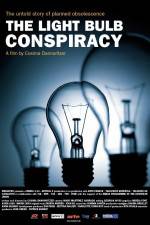

Once upon a time..... products were made to last. Then, at the beginning of the 1920s, a group of businessmen were struck by the following insight: 'A product that refuses to wear out is a tragedy of business' (1928). Thus Planned Obsolescence was born. Shortly after, the first worldwide cartel was set up expressly to reduce the life span of the incandescent light bulb, a symbol for innovation and bright new ideas, and the first official victim of Planned Obsolescence. During the 1950s, with the birth of the consumer society, the concept took on a whole new meaning, as explained by flamboyant designer Brooks Stevens: 'Planned Obsolescence, the desire to own something a little newer, a little better, a little sooner than is necessary...'. The growth society flourished, everybody had everything, the waste was piling up (preferably far away in illegal dumps in the Third World) - until consumers started rebelling... Can the modern growth society survive without Planned Obsolescence? Did the eternal light bulb ever exist? How can a tiny chip 'kill' a product? How did two artists from New York manage to extend the lives of millions of iPods? Is Planned Obsolescence itself becoming obsolete?
How to Watch The Light Bulb Conspiracy Legally and Safely
If you want to stream The Light Bulb Conspiracy through reputable and legal services, there are a few good options depending on where you are. Subscription platforms like HBO Max, Disney+, Netflix, Amazon Prime Video, and Apple TV+ sometimes carry The Light Bulb Conspiracy films or related DC titles—though availability depends on your country.
If you’d rather not commit to a subscription, there are ad‑supported, free (but legal) platforms such as Tubi, Pluto TV, Peacock or Crackle (where available in your region) that occasionally host superhero films.
Lastly, don’t forget about library‑linked streaming options like Kanopy or Hoopla (if your library or university is registered), and official uploads by film distributors on YouTube—these can also give you legal access to classic movies.